
When it comes to superhard material processing: every millimeter of scrap means direct loss of income. This pressure is multiplied many times when working with expensive high-end 74mm PCD blanks from brands like Element Six. As manufacturers of woodworking tools, efficiency and yield are often the difference between profit and loss.
1. Why EDM Processing Is Losing You Money
For years, Electrical Discharge Machining (EDM) was the most common way to process PCD. However, when you start working with larger 74mm diameter blanks, EDM shows its weaknesses and limitations. When using EDM you are normally left with a material utilization rate between 60%~70%.
1) The Width of Your Cut: EDM uses a copper wire that ranges from .1mm-.25mm in diameter. Add in the spark-gap distance and you’re cutting grooves between .2mm and .3mm wide. While cutting large 74mm diameter blanks, this adds up to a lot of lost usable material.
2) Impaired Conductivity: High-end PCD grades like Element Six’s CDA990 have higher densities of diamond and less metallic binder. As a result, the poor conductivity causes instability in your EDM and leads to wire breakage and increased scrap.
3) Extra Material for Grinding: Due to EDM being a thermal erosion process you end up with a large Heat Affected Zone (HAZ) as well as possible micro-cracks. To compensate you normally have to allow at least .2mm of extra material to grind away these defects.
2. Laser Cutting: Going from “Rough Cutting” to “High Yields”
By transitioning into laser cutting, or more specifically ultra-short pulse laser cutting you can achieve utilization rates of up to 85%~90%+. For many clients that extra 20% in yield is the difference between just breaking even or actually making a profit.
1) Smaller “Kerf”: Laser cutting uses a tiny focal spot. This means your slit will only be .05mm-.1mm wide. When laser nesting parts on a 74mm blank you can cut out dozens more tool tips than with EDM.
2) No Heat Affected Zone: Because nanosecond lasers can be considered “cold” processing. Your edge quality is so precise that you basically have no recast layer to grind away.
Performance Breakdown: EDM vs. Laser Cutting
Key Metric | EDM (Wire Cut) | Laser Cutting | Impact on ROI |
Kerf Width | 0.20 - 0.30 mm | 0.05 - 0.10 mm | Saves >50% in material gap loss |
Heat Affected Zone | Significant (Deep grinding) | Minimal (Micron-level) | Reduces grinding buffer by ~30% |
High-Concentration PCD | Poor (Unstable/Arcing) | Excellent (Non-contact) | Massive success rate jump on premium grades |
Total Yield | ~65% | ~88% | Directly boosts output by ~20% |
3. Industry Powerhouses: TKD CO.,LTD, Synova, and Trumpf
While these three names dominate the PCD scene, they serve different needs on the shop floor:
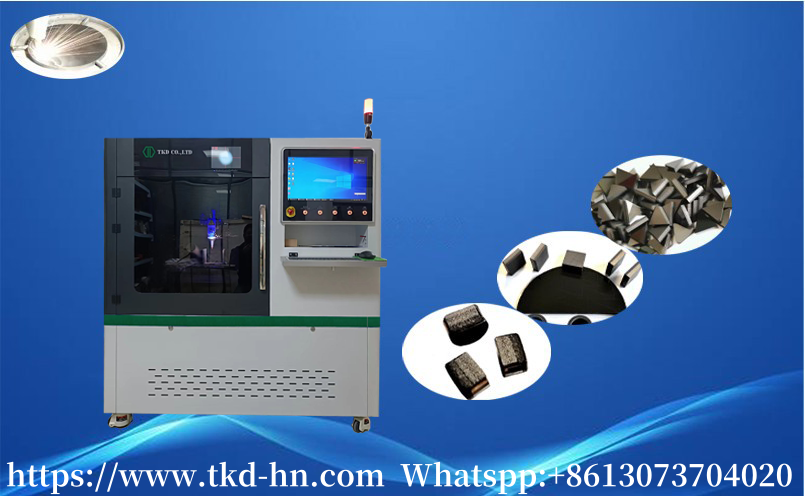
TKD CO.,LTD — PCD/PCBN/TC Laser cutting Specialist
Https://www.tkd-hn.com
If you are looking for ROI and rapid payback, TKD is often the first choice. Their QCW fiber laser systems are fine-tuned for PCD/PCBN, featuring mature process libraries specifically for woodworking shapes like saw teeth and shear angles. It’s a practical, high-efficiency workhorse.
Synova (Water-Guided Laser) — The Technological Ceiling
https://www.synova.ch/
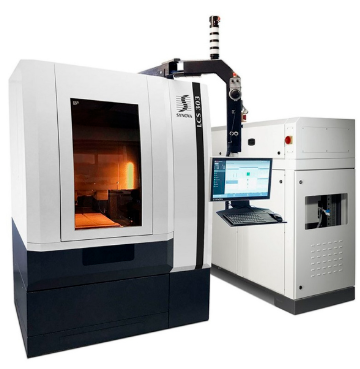
Synova’s LCS150/LCS303 series utilizes Laser MicroJet technology. Imagine a laser beam trapped inside a hair-thin water jet. The water acts as a cooling agent and a light guide, resulting in perfectly vertical edges with zero heat damage. For ultra-thick blanks or medical-grade precision, Synova is the undisputed leader.
Trumpf — The Industrial Heartbeat
https://www.trumpf.com
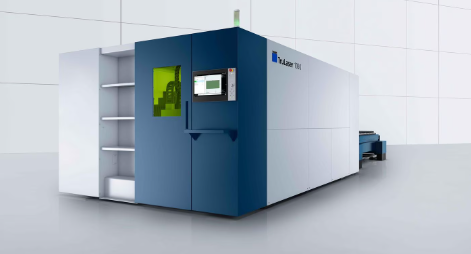
Trumpf is the world’s "engine" supplier for high-end lasers. Their TruMicro series picosecond sources power many top-tier machines (including high-end domestic integrators). Choosing a system backed by Trumpf ensures industrial-grade stability and consistency across massive production runs.
=====FAQ=====
PCD Processing FAQ: Maximizing Yield and ROI
Q1: Why is laser cutting superior to EDM for processing 74mm Element Six PCD blanks?
A: The primary advantage is material yield. Traditional EDM uses a copper wire that, combined with the spark gap, creates a 0.2mm–0.3mm cut width (kerf). Advanced laser cutting reduces this kerf to just 0.05mm–0.1mm. For high-value 74mm blanks, this precision allows for tighter nesting, typically increasing your total material utilization from 65% to nearly 90%.
Q2: How does laser cutting reduce the total cost of woodworking tool production?
A: Beyond saving expensive diamond material, laser cutting significantly slashes "hidden" costs. Because it is a non-contact "cold" process (especially with picosecond lasers), it leaves virtually no Heat Affected Zone (HAZ) or recast layer. This means you can reduce your post-process grinding allowance by approximately 30%–70%, saving both time and grinding wheel consumables.
Q3: Can laser technology handle high-concentration PCD grades like Element Six CDA990?
A: Yes, absolutely. High-concentration PCD is notoriously difficult for EDM because the low metallic binder content results in poor conductivity and frequent wire breakage. Laser cutting does not rely on conductivity; it uses high-energy light to ablate the material. This ensures a stable, high-speed process even on the most diamond-dense premium grades.
Q4: Which laser system is right for my shop: TKD, Synova, or a Trumpf-based integrator?
A: It depends on your specific production focus:
TKD CO.,LTD: Best for woodworking tool specialists seeking rapid ROI and mature process libraries for saw teeth and shear angles.
Synova: The choice for ultra-thick or high-precision tools requiring perfectly vertical edges and zero heat damage via Water-Guided Laser technology.
Trumpf: The preferred option for high-volume manufacturers requiring industrial-grade stability and world-class laser source consistency.
Q5: What is the typical Return on Investment (ROI) when switching from EDM to laser?
A: For shops processing high-value blanks like the 74mm series, the material savings alone—often a 20% increase in yield—typically allow the equipment to pay for itself within 12 to 18 months. When you factor in reduced grinding time and lower scrap rates, laser cutting becomes a critical survival strategy for modern tool manufacturers.


 Whatsapp/wechat