
Cu-Diamond, Also Named Copper-diamond heat spreader, the hardness of these material is close to that of diamond, and it also has high thermal conductivity; The ductility and conductivity of copper are also preserved. Diamond endows materials with hardness and thermal conductivity advantages, while copper reduces brittleness through heat dissipation. The formation of this composite material is not simply mixing, but through precise interface treatment processes (such as chrome plating, molybdenum plating) to ensure good bonding between the two, thereby achieving optimal performance.
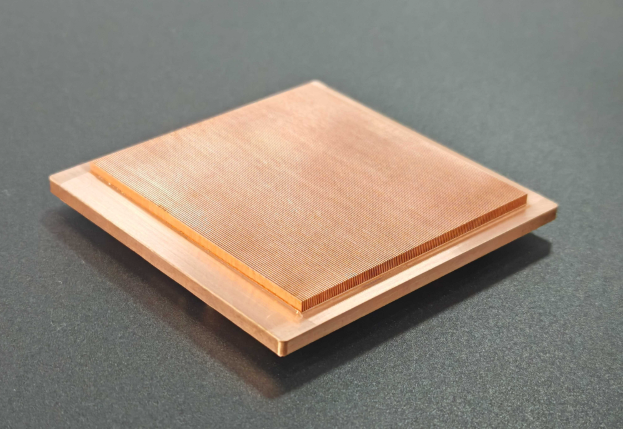
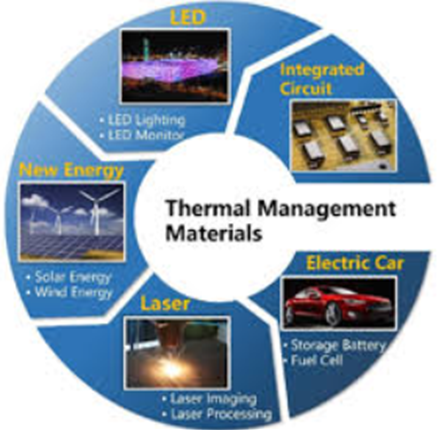
The thermal conductivity of Diamond Copper Composite is approximately 600 to 1200 W/(m · K), which is 3 to 5 times that of pure copper. It enables rapid heat conduction and is suitable for solving common overheating problems in electronic products. In addition, its thermal expansion coefficient is controlled between 4 and 8 × 10 ⁻⁶ K ⁻¹, which is similar to chip materials such as silicon and silicon carbide, and helps to reduce chip damage caused by thermal expansion differences during the packaging process. This material has a lower density than traditional heat dissipation materials, and its surface can be plated with nickel or gold for subsequent welding and sealing work. With these characteristics, Diamond Copper Composite material has been widely used in fields such as 5G communication, high-power lasers, and aerospace.
Although the material has excellent performance, its processing difficulty is relatively high. Diamond is the hardest material in nature, while copper has a soft and resilient texture, which can easily lead to blunting of the cutting edge when using traditional cutting tools. Scratches (diamond particle detachment) and wire drawing (copper substrate tearing) are prone to occur during the cutting process, resulting in rough surface and difficult quality assurance of the final product. In addition, there is a significant difference in the thermal expansion coefficients between diamonds and copper, which can easily cause cracks or fractures, making traditional cutting methods difficult to cope with.
The advantage of laser cutting lies in the use of non-contact processing, with highly concentrated laser energy that can cause local melting or gasification of materials, avoiding tool wear. Combined with a high-precision motion control system, it is possible to achieve precise cutting with a line width of only 50 to 200 microns, with straight cuts and small dimensional errors. Laser processing is fast, easy to achieve automation, and significantly improves production efficiency. Auxiliary gases (high-pressure nitrogen or argon) not only remove slag and prevent oxidation, but also protect materials by adjusting laser parameters, reducing the risk of diamond particle detachment, copper substrate damage, and diamond graphitization. The final cutting edge quality is high, with a surface roughness of less than 1 μ m, and the impact on thermal conductivity is usually less than 10%.
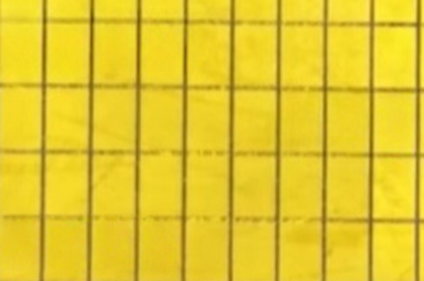
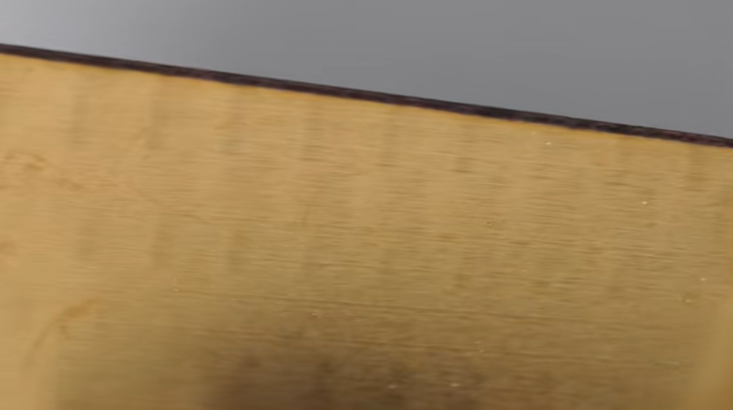
There are still challenges in the laser cutting process, mainly how to efficiently utilize laser energy to cut copper and diamond, two materials with significant differences in optical properties. Copper tools have high reflectivity, while diamond has low absorption, which places high demands on power control. Researchers have alleviated the problem by using ultrafast lasers (picosecond or femtosecond level energy input) to shorten thermal diffusion time, high-frequency pulse mode cooling materials, spiral cutting paths and preheating annealing to reduce thermal stress and cracks, and dynamic focal length adjustment to maintain cutting uniformity. Low energy laser or chemical polishing can be used to treat residual microcracks and slag after cutting.
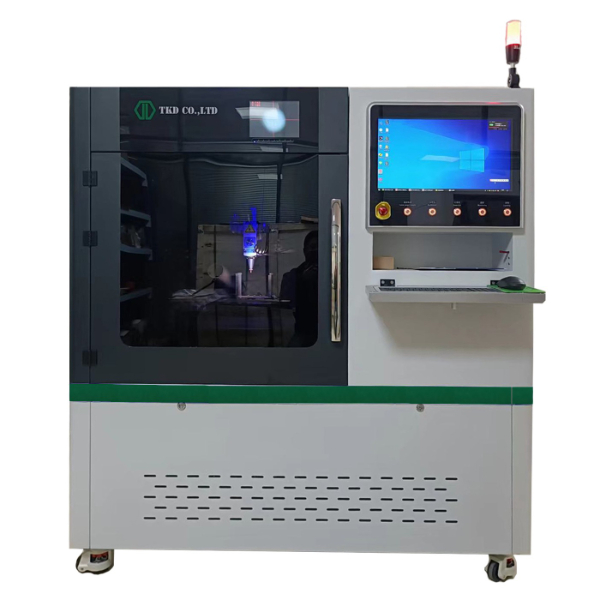
TKD CO., LTD's laser cutting equipment has been validated in the industry for many years, with high-precision motion control, stable laser output, and excellent auxiliary gas system. It can effectively solve the key problems caused by reflection, heat dissipation, and thermal shock in diamond copper composite material processing, and support efficient production of high-quality products. The company has accumulated rich experience in the fields of polycrystalline diamond (PCD), chemical vapor deposition (CVD) diamond films, and diamond copper composite material cutting, and continues to promote technological optimization.


 Whatsapp/wechat